Original roller setup
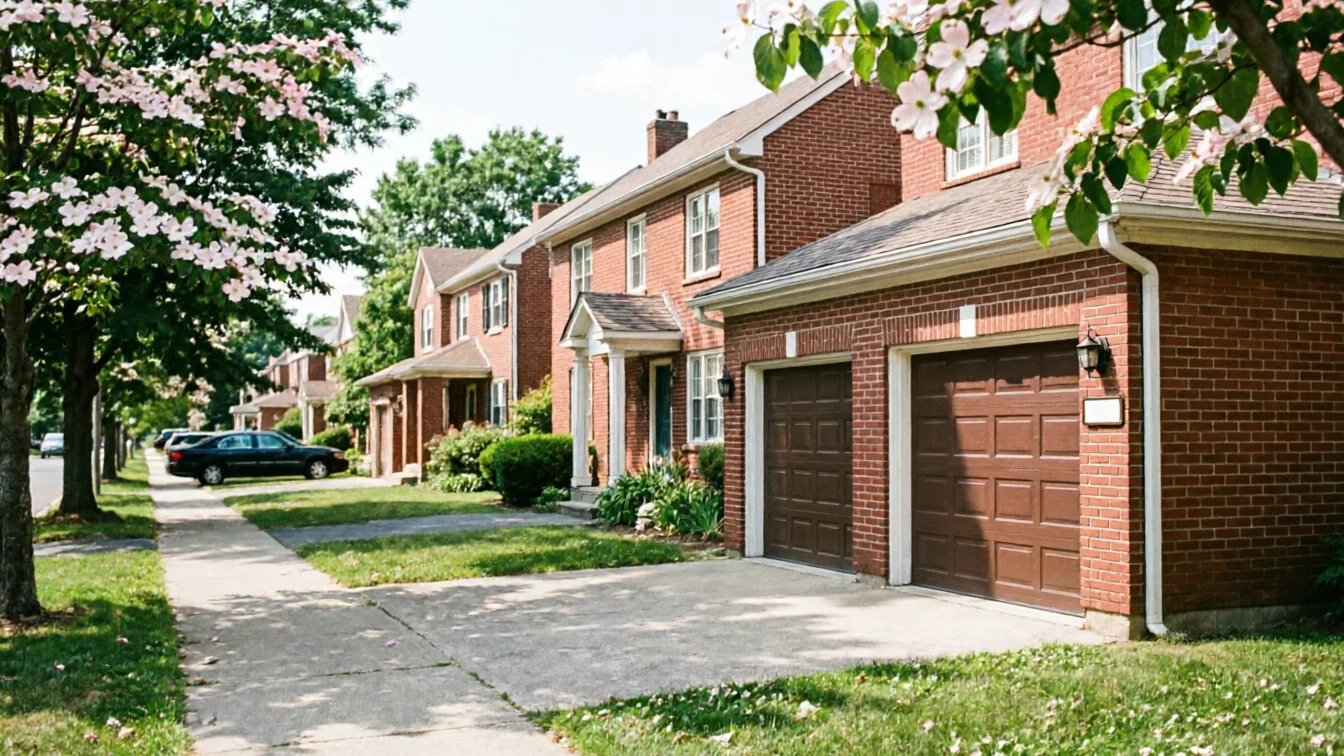
On a lot of the houses around here - built between 1938 and 1982, with the bulk of that stock going up through the 1960s and 70s - the original roller setup is still in the track.
Scranton, PA
Scranton's 1960s-era garage doors run on original steel rollers that seize in cold winters. Here's what roller failure looks like and when replacement beats a patch job.
Warning signs
If your door grinds, hops in the track, or stalls halfway up with a scraping sound, the rollers are usually the reason, not the opener.
On a lot of the houses around here - built between 1938 and 1982, with the bulk of that stock going up through the 1960s and 70s - the original roller setup is still in the track.
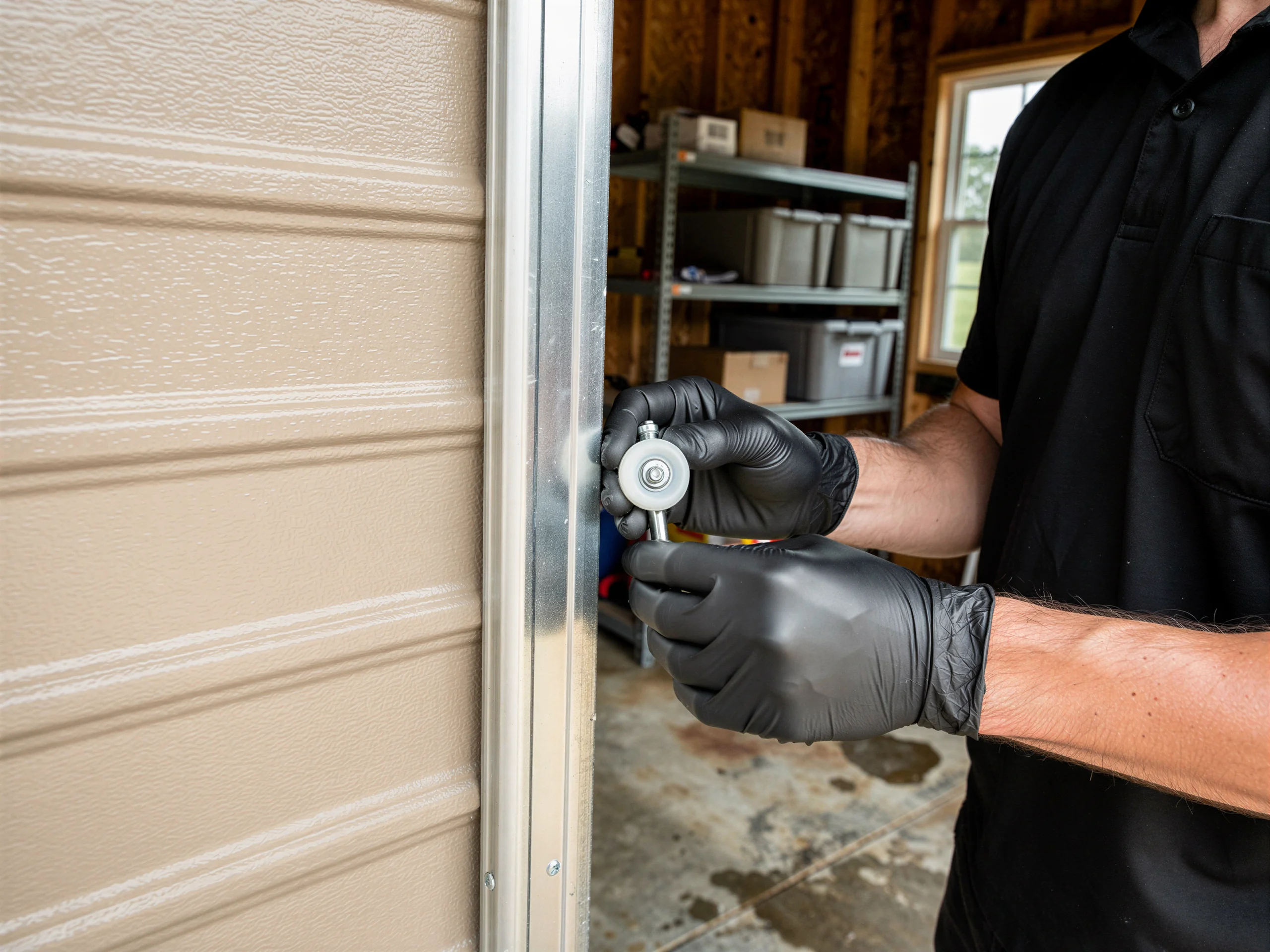
That means steel rollers with no ball bearing, riding on tracks that have narrowed slightly from decades of paint and rust buildup. You'll hear it before you see it: a rhythmic clunk as each roller hits a worn spot, or a flat spot on one wheel that makes the whole door shudder.
Look at the track where the roller stem meets the bracket - if there's a groove worn into the metal, or the roller wobbles side to side when you turn it by hand, it's done.
Sometimes only two or three rollers on one side have failed while the others are fine, which is why a full-door tune-up after a roller swap matters - uneven rollers put the whole system out of alignment again within a season. A cracked nylon roller is a different story - you'll see a visible split in the wheel, usually near the stem, rather than wear on the running surface.
DIY or pro
Swapping a single roller on an unsprung door, with the door down and the opener disconnected, is within reach for a lot of homeowners - it's a few bolts and a bracket.
Where it stops being a weekend job is the top rollers near the spring and cable system, or any roller on a door where the torsion spring is original to a house built before 1982.
Those springs are decades past any reasonable service life, and pulling a bracket near a loaded spring is how people get hurt. The honest limit: if you're replacing one roller because it cracked, go ahead if you're comfortable with a wrench.
If you're replacing all of them because the whole set is original, you're also looking at track wear, a hardened lift cable, and possibly a spring that's one cold morning from letting go - and that's not a roller job anymore, it's a full tune-up. We won't tell you to call us for a $4 roller. We will tell you to call before you put a ladder near a spring that's older than your car.
Local causes
Scranton sits in a climate band classed as cold and severe, and that's the actual driver of roller failure in this area, not just age. Steel rollers without bearings lose their lubrication in freeze-thaw cycles - grease stiffens below freezing, then washes thin when it warms up and refreezes overnight. Repeat that fifteen or twenty times a winter and the roller stem wears oval instead of round, which is what causes the side-to-side wobble and the grinding.
Nylon rollers have the opposite problem: they're quieter and don't need grease, but cold makes the nylon brittle. A door that gets worked hard in January - opened and closed with ice on the bottom seal, or forced through a slightly frozen track - is how a nylon roller splits outright instead of just wearing down.
Because most of the housing across this service area dates to the 1960s and 70s, with a hard low end at 1938, a large share of the doors we see still have the builder-grade steel rollers that came with the house. They were fine for forty winters. They're not fine for a forty-first.
Booking
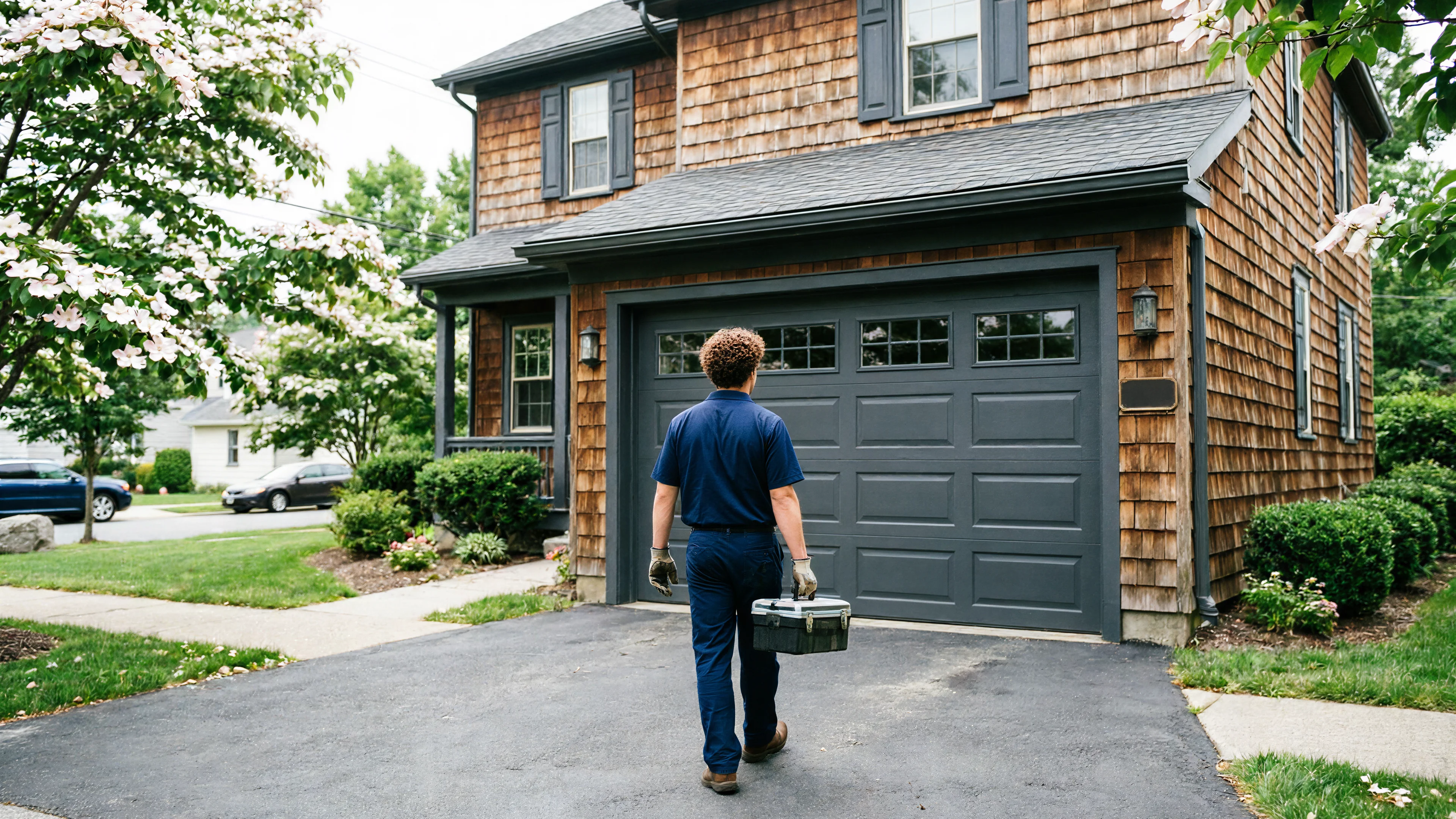
If a roller's cracked, grinding, or hopping the track, tell us what you're hearing and roughly how old the door is - that's usually enough to know whether it's a roller-only job or something to check at the same visit, like the track alignment or the spring. We work across the service area, including the towns around Scranton, and schedule by what's actually wrong with the door, not a flat callout script.
You can reach us through the contact page to get a visit set up.
Questions
Most residential doors run 10 to 12 rollers. You don't have to replace them all if only a couple have failed, but if the door is original to a house from the 1960s or 70s, the rest are usually close behind and replacing the set at once saves you a second visit.
Cold makes grease on steel rollers stiffen and nylon rollers go brittle. In a climate like ours, with real winters, that seasonal swing wears rollers faster than the same door would wear in a milder region. By spring the wear is usually there to stay, not just a cold-weather symptom.
If the rollers still turn smoothly and round, lubricant buys you time. Once a roller stem has worn oval or a nylon wheel has a visible crack, grease won't fix the shape of the part. At that point it's wear, not friction, and the fix is replacement.
Explore more
Ready when you are
Scranton Garage Door Pros repairs and installs garage doors, springs and openers in Scranton, PA and the surrounding area.