
Blog
Why Your Safety Sensors Keep Drifting in a Scranton Garage
Scranton homes built 1938-1982 and the region's cold winters both push safety sensors out of alignment. Here's what that costs and what to watch for.
The Cost of This Job
We don't quote a flat number for sensor work because the fix depends on what's actually wrong. Sometimes it's a five-minute realignment - loosen the wing nut, slide the eye back into line, done. Other times the bracket itself is bent or the wire running to it has cracked from age, and that means a new bracket or a new sensor pair. On houses built in the 1960s and 70s, which covers most of the stock in this service area, the original low-voltage wiring is often original too, and brittle insulation can be the real problem hiding behind what looks like a simple alignment issue. We check the wire before we touch the bracket, because replacing a sensor that was never broken doesn't fix anything. If your opener is also original to a house from that era, we'll tell you honestly whether the sensor is worth chasing or whether the whole unit is due.
What Local Conditions Do
This area sits in a cold climate band with severe winter conditions, and that matters more for sensors than people expect. Frost heave moves concrete slabs a little every winter as the ground freezes and thaws, and a slab that shifts even a quarter inch can tilt the sensor bracket bolted to it just enough to throw the beam off. Houses here were mostly built between 1938 and 1982, median around 1960, which means a lot of garages sit on slabs that have gone through sixty-plus freeze-thaw cycles. Add road salt and the de-icer tracked in on car tires every winter, and the metal brackets and screws corrode faster than they would somewhere with milder winters. We see the same pattern across the named neighborhoods and towns within a few miles of Scranton - Dunmore, Moosic, Throop, Dickson City - slab movement plus corrosion, not one dramatic failure but a slow drift that homeowners notice only when the door starts reversing for no obvious reason.
What Is Going On
The two sensors sit a few inches off the floor on either side of the track, aimed at each other so they form an invisible beam across the opening. When anything breaks that beam, the door won't close - that's the safety feature working as designed. Drift happens when one sensor's angle shifts even a degree or two, so the beam that used to line up dead center now clips the edge of the receiver lens. Dust, spiderwebs, and a stray garden hose catching the wire can all do it too, but on older homes here the more common cause is the bracket mount loosening as the slab and the stud it's screwed to move independently over the years. The fix is almost always mechanical, not electrical - you're re-aiming two small boxes until the indicator light on each one goes from blinking to solid.
Doing Nothing For Now
If your sensors are drifting and you've started working around it - standing in the doorway while you close it, or holding the remote button down to force the door past the point it stops - stop doing that. The sensor isn't a nuisance feature; it's what keeps the door from coming down on a kid, a pet, or a bumper. We'll say plainly that a door with one failed sensor isn't a small issue to live with, even for a week. That said, not every drift needs a truck out that day. If the door still closes fine and the sensors just need a bracket snugged down, that can wait for a normal appointment. What can't wait is a door that closes regardless of what's in the beam - that's a dead sensor, not a drifted one, and it should get looked at before the next time the garage gets used.
Questions
Common questions
Why did my garage door sensors suddenly stop lining up this winter?
In this area the most common cause is slab movement from freeze-thaw cycles - the concrete shifts slightly as the ground freezes, which tilts the sensor bracket bolted to it. It's a seasonal pattern, not usually a sign the sensor itself has failed, but it's worth checking before the drift gets worse.
Is it safe to keep using the door if the sensors are slightly off?
If the door still stops and reverses when something breaks the beam, a slight misalignment on the edge is tolerable short term. If the door closes no matter what's underneath it, that sensor has failed, not drifted, and you shouldn't use the door until it's fixed.
My house was built in the 1960s - is the original wiring part of the problem?
It can be. A lot of homes in this area still have original low-voltage wiring to the sensors, and after sixty years the insulation can crack, especially where it's exposed to garage temperature swings. We check the wire itself before assuming the sensor eye is the issue.
Can I realign the sensors myself?
Often yes - loosen the wing nut on the bracket, adjust the angle until the indicator light goes solid, then retighten. If you've done that and it still won't hold alignment, the bracket or the slab under it has likely moved enough that it needs a proper remount.
Recommendation
You Might Also Like
More garage door guides for Scranton homeowners.
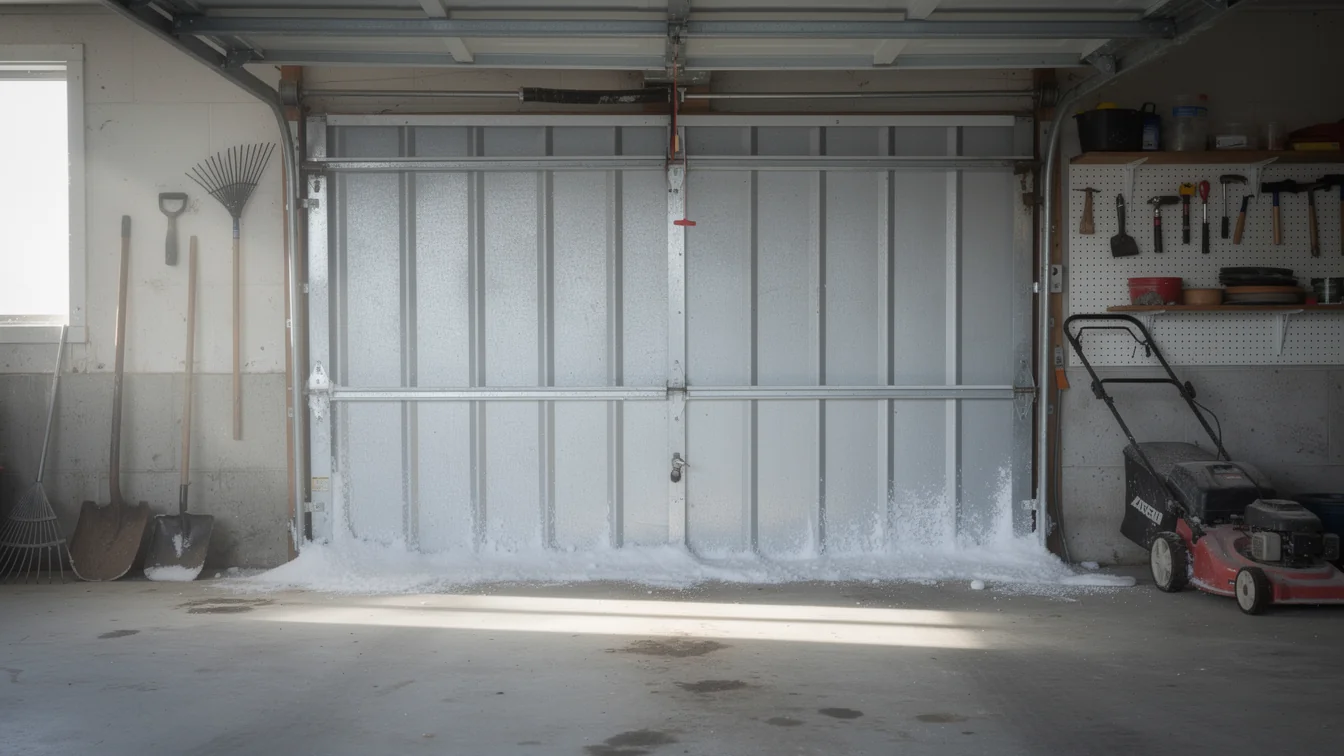 Why a Garage Door Goes Off Track Here in Scranton
Scranton's 1938-1982 housing stock and cold winters push garage door tracks out of alignment.
 What It Actually Costs to Replace a Garage Door in Scranton
Scranton homes built between 1938 and 1982 face cold-climate wear that changes what a replacement garage door actually costs.
 Openers and Power Cuts: What Scranton's Older Garage Stock Means for You
Scranton homes built 1938-1982 often run openers that weren't made for cold-severe winters or modern power interruptions.
Ready when you are
Need a garage door sorted in Scranton?
Scranton Garage Door Pros repairs and installs garage doors, springs and openers in Scranton, PA and the surrounding area.