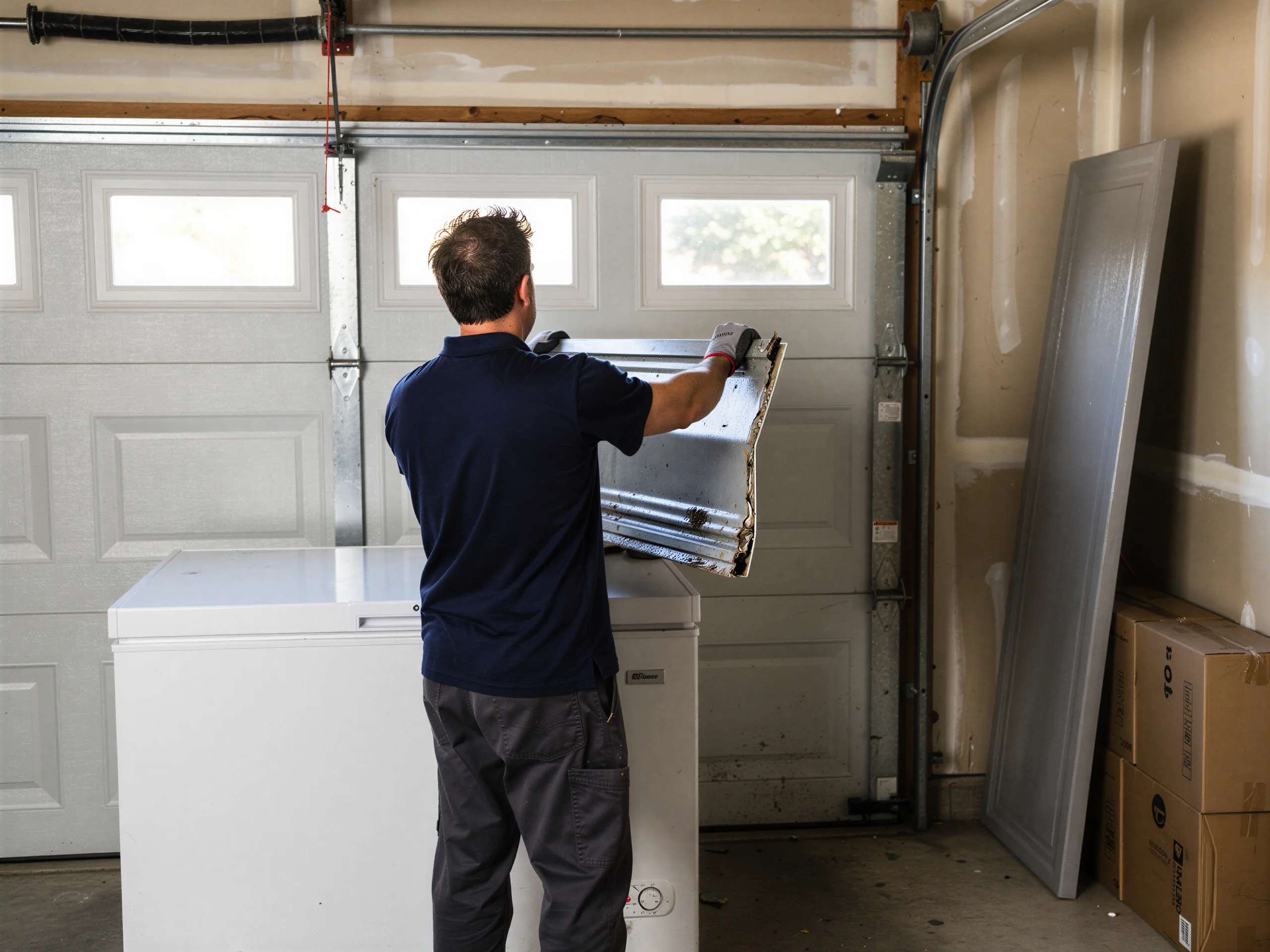
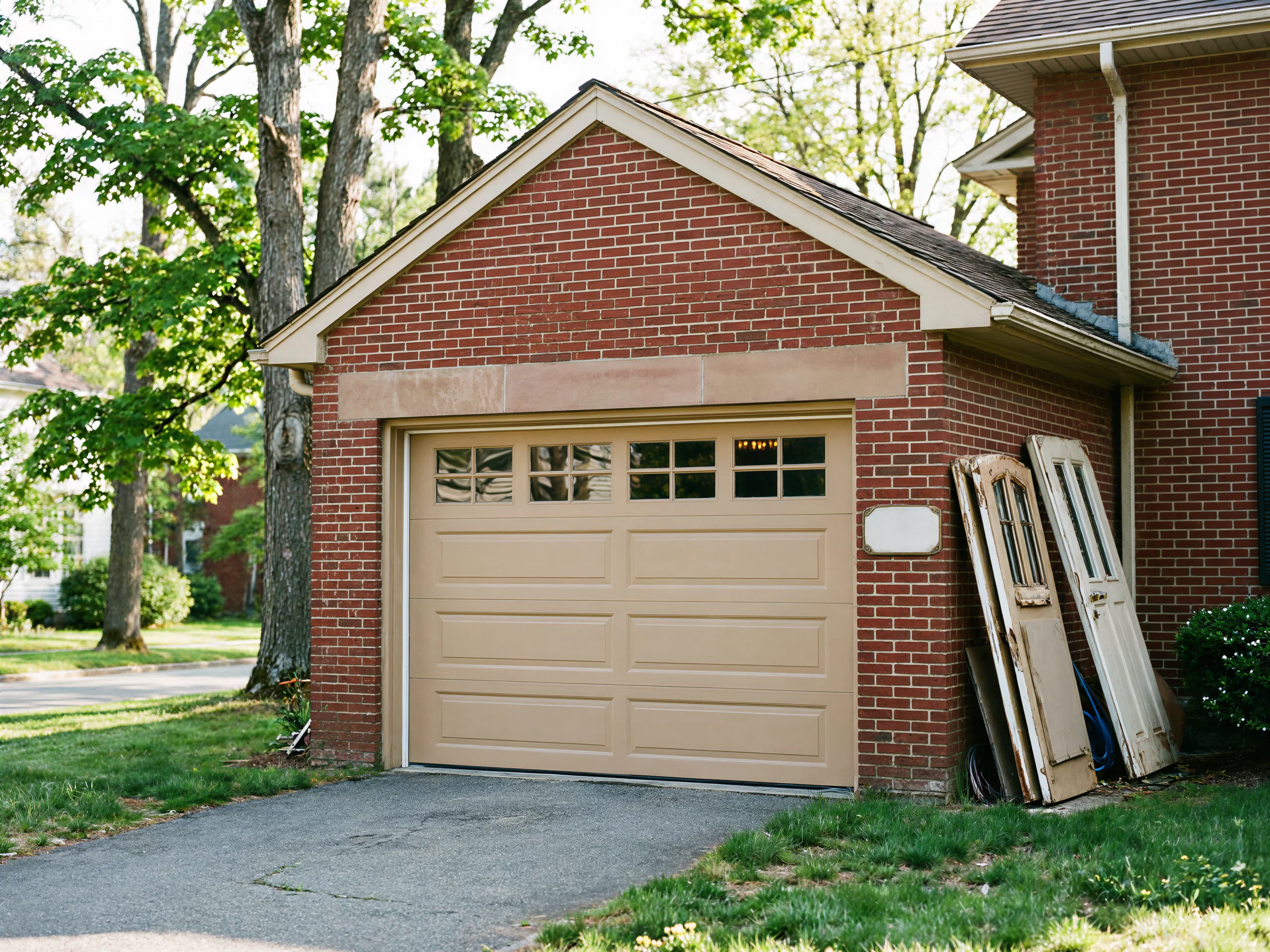
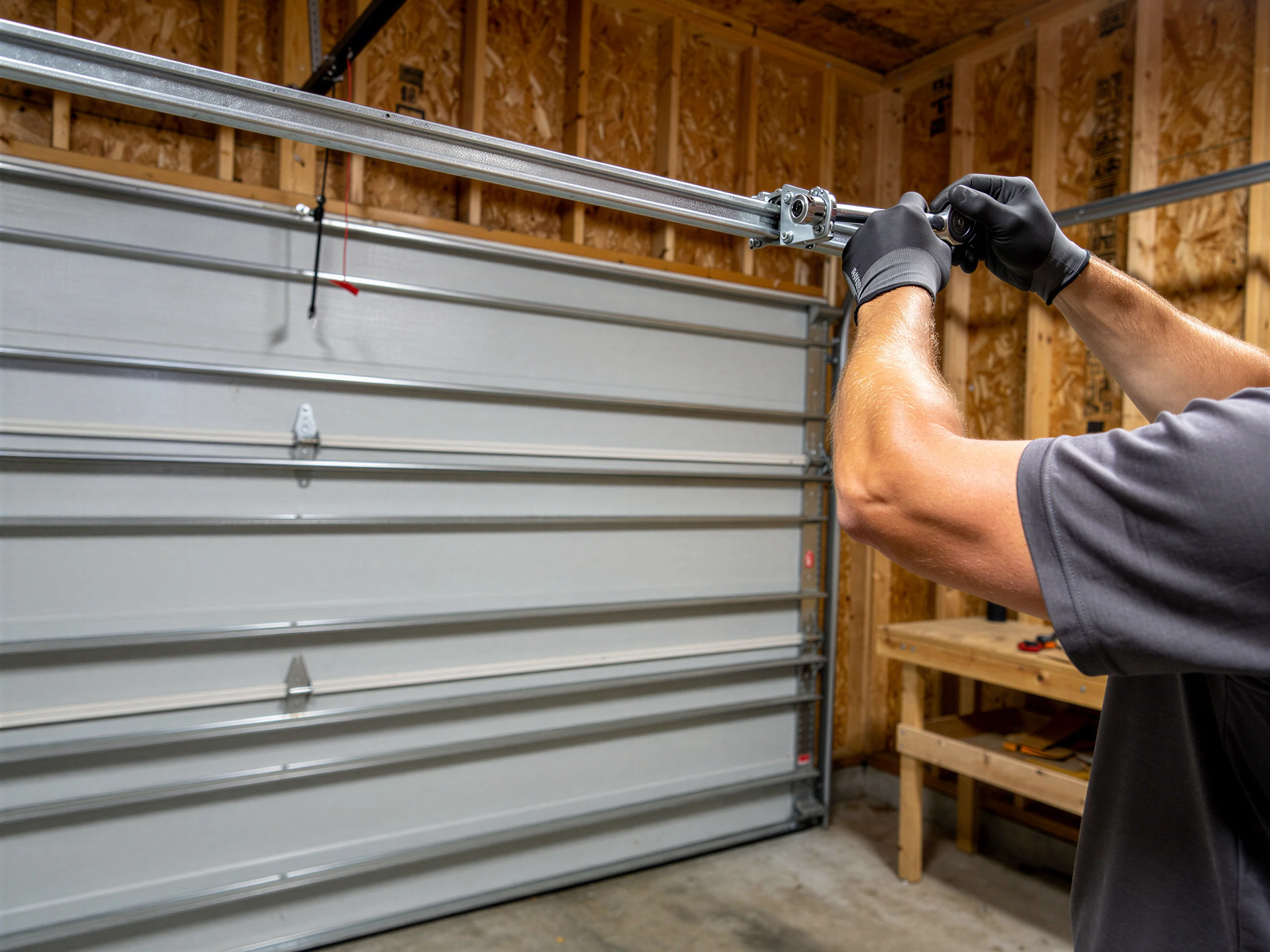
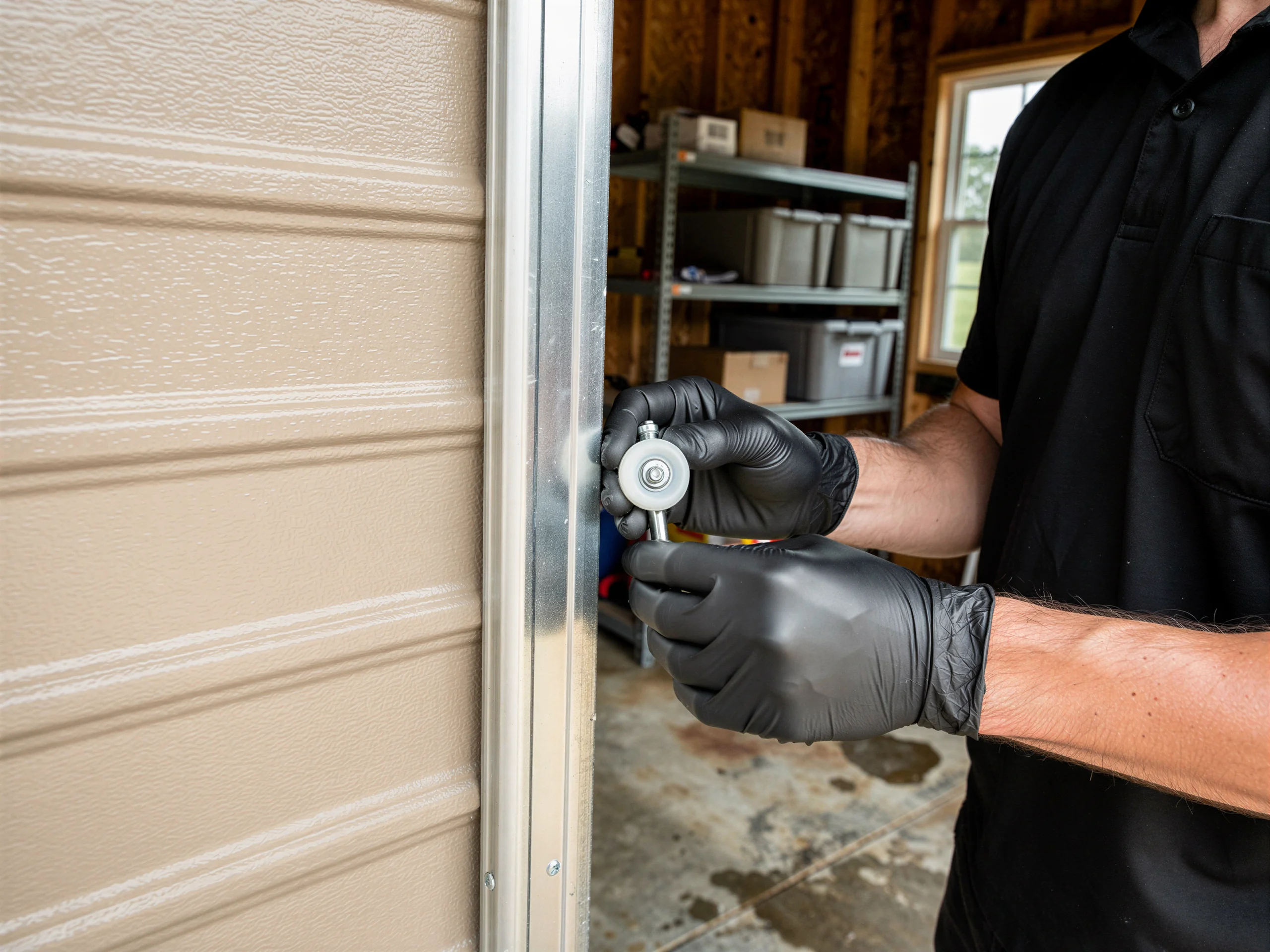
Most of the housing stock across this service area went up between 1938 and 1982, with a lot of it clustered in the 1960s and 70s - older garages built for older, lighter doors that have since been replaced with heavier steel sections on the original (often undersized) tracks and hardware. That mismatch puts more stress on individual panels every time the door cycles, especially the bottom section that takes the brunt of the opening and closing.
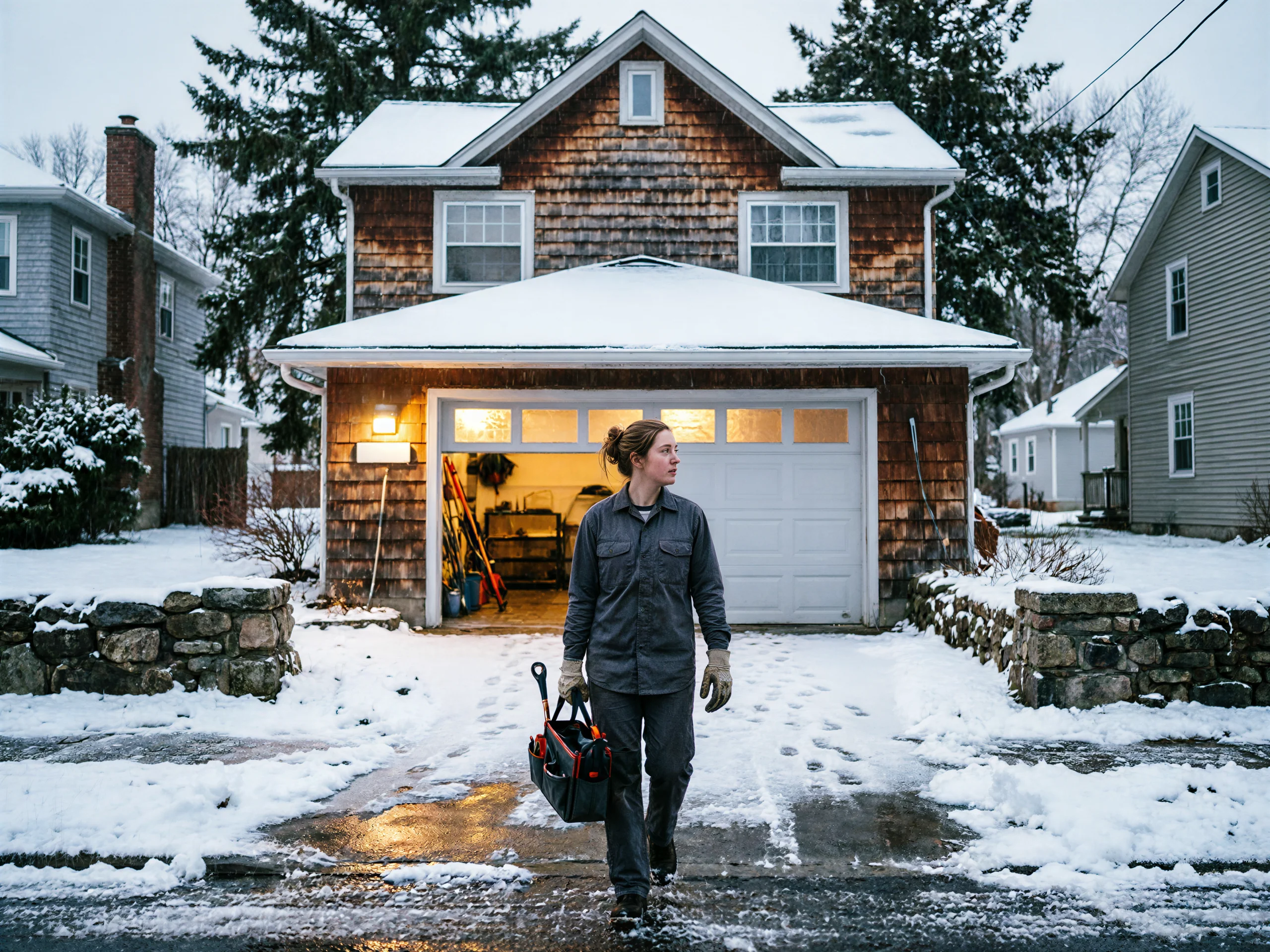
The cold is the other half of it. This area sits in a severe cold climate band, which means real freeze-thaw cycles every winter - moisture gets into a scratch or a ding in the coating, freezes, expands the crack, and by March that small chip is a rust patch working its way through the steel. Combine that with decades-old doors that were never fully weatherstripped to current standards, and the bottom one or two panels on an older door take damage that a newer, better-sealed door in a milder climate just doesn't see at the same rate.
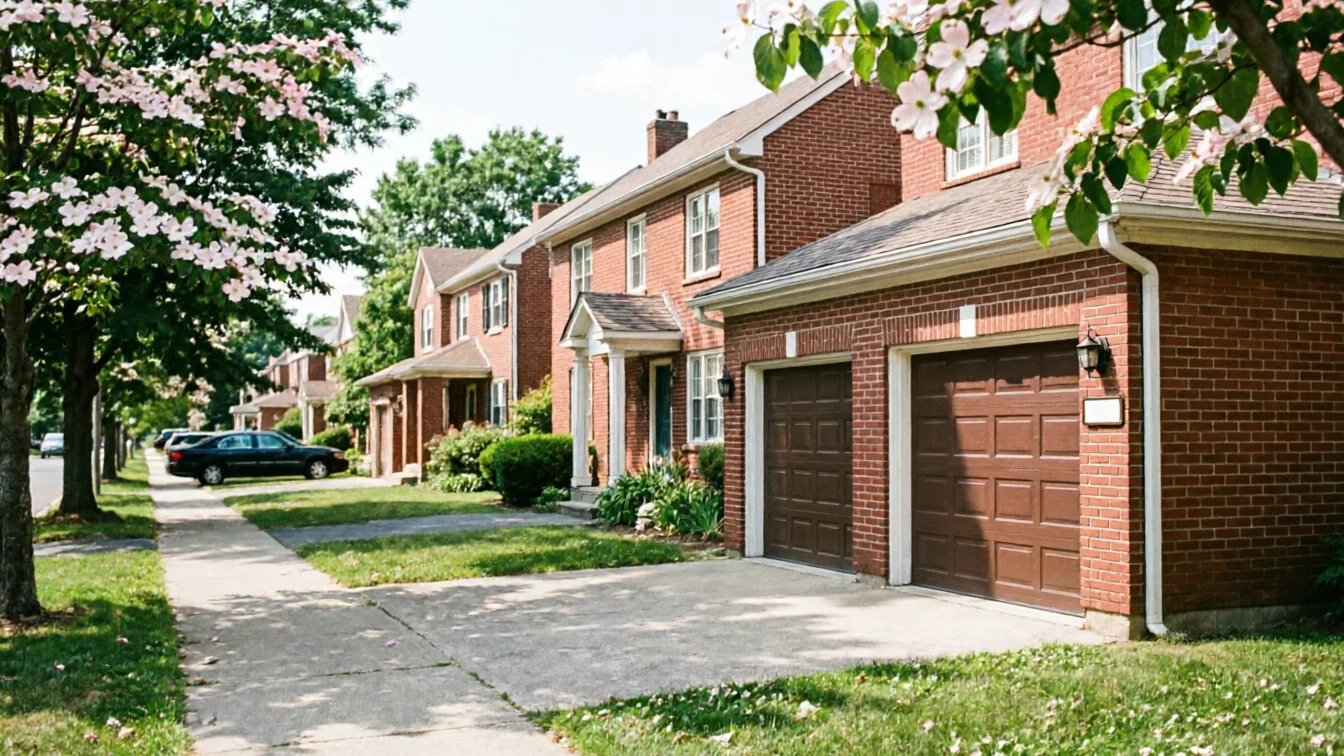
We see this pattern across the whole area we cover, not just one neighborhood - it's tied to the age of the housing stock and the winters, not to any one street.